A Nebraska Community Reflects on Mental Health After a Profound Family Loss
The town of Cozad, Nebraska, is taking time to reflect after a deeply emotional event that has affected many residents and sparked renewed conversations about mental health care in America. What was expected to be a meaningful weekend centered around a high school graduation instead became a period of collective grief and quiet reflection for a close-knit community.
Local authorities responded to a situation involving the Koch family on a Saturday morning. The matter remains under official review, and out of respect for those involved, officials have shared limited details. What has been acknowledged, however, is that the situation appears to be connected to long-term mental health challenges — an issue that touches countless families across the country.
In the days following, Bailey Koch’s parents, Lane and Peggy Kugler, chose to speak publicly — not to dwell on the circumstances, but to highlight a broader issue they believe deserves urgent attention: the ongoing gaps in access to comprehensive mental health care, particularly in smaller and rural communities.
A Family Known for Compassion and Openness
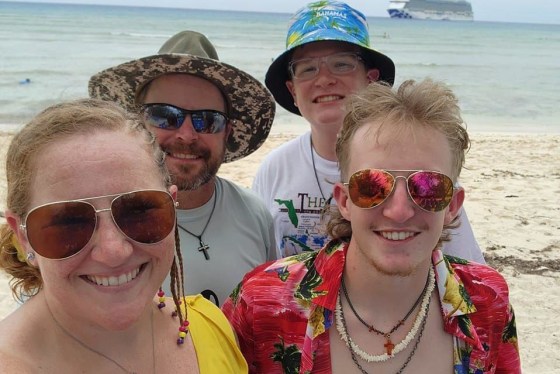
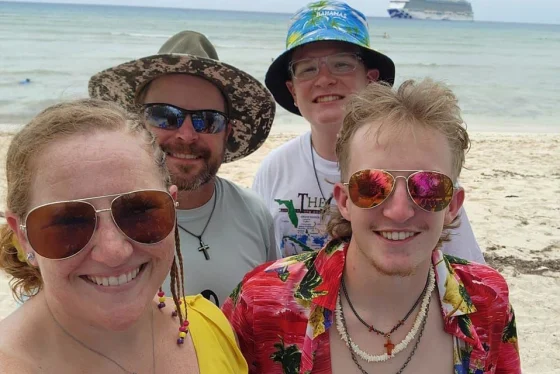
Bailey and Jeremy Koch were familiar faces in Cozad. Friends and neighbors described them as thoughtful, faith-oriented, and deeply devoted to their two teenage sons. They were active in their church and well known for their willingness to speak openly about mental health — a topic many still find difficult to address.
The family had even created a public Facebook page, Anchoring Hope for Mental Health, where Bailey shared updates about their journey. Her posts reflected optimism, honesty, and determination, documenting both progress and setbacks while encouraging others to seek help without shame.
Shortly before the incident, Bailey had shared encouraging news that Jeremy had recently completed a stay at a mental health facility and that the family was preparing to begin a new phase of treatment.
“We finally feel supported and heard,” she wrote at the time. “This feels like a step in the right direction.”
Those words, shared in hope, now stand as a reminder of how complex and fragile mental health recovery can be — even when families do everything they can.
When Care Is Difficult to Access

In a statement shared later, the Kuglers emphasized that their family’s experience was not due to neglect, lack of effort, or lack of love. They described Jeremy’s condition as a serious medical illness that had progressed over time and required sustained, specialized care.
They also spoke candidly about the challenges of navigating the mental health system — long wait times, limited local resources, and the difficulty of securing consistent follow-up treatment.
“Mental illness is not a failure of character,” the family wrote. “It is a medical condition that deserves timely and ongoing care.”
Their message was not one of blame, but of urgency: many families face similar barriers, often while managing crises behind closed doors.
A Widespread Challenge Across the U.S.

Mental health advocates note that this experience reflects a national pattern.
According to data from the National Alliance on Mental Illness (NAMI), more than half of U.S. adults living with a mental health condition do not receive treatment in a given year. In rural areas, the shortage of mental health professionals and inpatient facilities makes access even more difficult.
For families dealing with severe conditions such as major depression or psychotic disorders, delays in care can increase instability and emotional strain, even when support systems are actively seeking help.
Nebraska, like many states with large rural regions, continues to face challenges in recruiting mental health providers and ensuring that treatment remains accessible beyond short-term care.
A Mother’s Advocacy
Bailey’s social media posts, now widely shared, reflect persistence rather than despair. She wrote about navigating insurance limitations, repeated hospital visits, and the emotional toll of uncertainty — all while continuing to advocate publicly for better mental health awareness.
Her words encouraged others to speak openly, reduce stigma, and keep asking for help even when the system feels overwhelming.
Community members say her voice helped others feel less alone, and her message continues to resonate beyond Cozad.
Community Response and Support
Following the event, local schools, churches, and civic groups worked together to provide counseling resources and support for students, families, and staff. The school district acknowledged the emotional impact on the community and ensured that mental health professionals were available.
Residents described an outpouring of compassion — quiet gestures of support, shared meals, and conversations centered on care rather than speculation.
For many, the moment became a turning point, encouraging deeper discussion about how communities can better support families facing mental health challenges.
Turning Grief Into Purpose
The Kuglers have since expressed hope that their family’s experience can lead to meaningful change. They are encouraging conversations around policy reform and community-level solutions, including:
-
Expanding insurance coverage for long-term mental health treatment
-
Increasing incentives for mental health professionals in rural areas
-
Improving crisis response options for families seeking urgent help
-
Strengthening public education to normalize early intervention
Their message is simple but firm: awareness must be matched with action.
Resources for Those Who Need Support
Mental health professionals stress that reaching out early can make a significant difference. For individuals or families seeking support, the following resources are available in the U.S.:
-
988 Suicide & Crisis Lifeline
Call or text 988 | 🌐 988lifeline.org -
NAMI Helpline
📞 1-800-950-NAMI (6264) | 🌐 nami.org -
Mental Health America
🌐 mhanational.org
Local health centers, faith organizations, and online counseling platforms may also offer low-cost or free services.
Moving Forward With Compassion
The Koch family’s story has become part of a larger conversation — one about listening more closely, responding more quickly, and recognizing mental health care as essential health care.
While their absence is deeply felt, the discussions their story has sparked may help prevent other families from facing similar struggles in silence.
In remembering them, the community of Cozad — and many beyond it — are being called not just to grieve, but to build systems that respond with care, dignity, and urgency.
